
Does an Octopus Have a Skeleton? How Its Body Is Supported
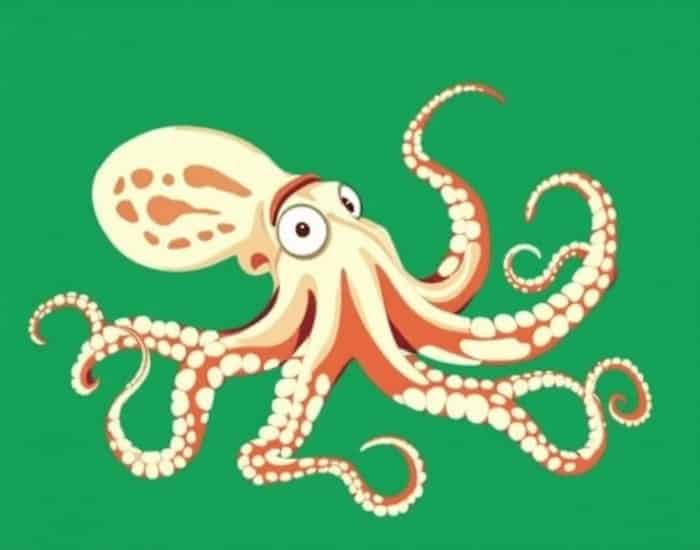
An octopus does not have a bony internal skeleton. It also lacks the external shell seen in many other mollusks. This soft-bodied anatomy is one reason octopuses can bend, stretch and pass through openings only slightly larger than their hard beak.

How can an animal move without bones?
Octopus arms are built from densely arranged muscle rather than bones and joints. This muscular-hydrostat system allows an arm to bend, shorten, lengthen and twist in many directions while maintaining control.
What hard parts does an octopus have?
The most important hard structure is the beak, located where the arms meet. The beak is used to bite and process prey. Because it is rigid, it can limit the smallest opening an octopus can pass through.
What happened to the mollusk shell?
Octopuses are cephalopod mollusks, relatives of squid, cuttlefish and nautiluses. Their evolutionary lineage reduced the shell dramatically, leaving modern octopuses with a highly flexible body.
Does flexibility make them fragile?
Soft tissue can still generate powerful movement. Octopuses use coordinated muscles, suckers and jet propulsion for locomotion and handling prey. Their lack of bones is an adaptation, not a sign of a structurally unsupported body.
What about the beak?
Our octopus beak guide explains how this hard feeding structure fits into an otherwise soft body.


0 comments